
A leaking water heater does not always mean a dying water heater. Plenty of leaks come from parts that are cheap and quick to replace: a relief valve that no longer seats, a plastic drain valve that has started to weep, a supply connector with a tired gasket, or a dielectric nipple rusting at the top of the tank. Some puddles are not leaks at all but condensation, especially on a newly filled tank or a gas unit starting up in muggy weather. The one leak that cannot be repaired is water seeping from the steel tank, usually through the bottom or a seam. For Hamilton, OH homeowners, the difference between a small repair and a new heater is why diagnosis comes first.
Our diagnosis is methodical. We dry the area, look at the T&P valve and the end of its discharge pipe, inspect the drain valve, and follow the hot and cold lines up to the fittings on top of the tank. On gas units, we check the combustion chamber for water, which can point to condensation or, more seriously, a failing tank. If the relief valve has been discharging, we put a gauge on the system to read static pressure and check for thermal expansion, since a closed plumbing system without an expansion tank can spike pressure every time the burner runs. After all of that do we recommend a fix.
Once we know the source, the repair is usually straightforward. A new T&P valve, a brass drain valve in place of a weeping plastic one, fresh dielectric fittings or supply connectors, and an expansion tank or pressure-reducing valve where pressure is to blame can all be handled on the spot. A corroded tank is different. Nothing will reliably seal a rusted tank, so we explain replacement honestly and walk through the choices. Before we leave, we can add a drain pan with a drain line and a leak sensor, especially for heaters in attics, closets, or upstairs. Call (513) 270-1009 for leak repair in Hamilton.
Our two most requested services are Water Heater Repair in Hamilton and Water Heater Replacement in Hamilton. Start there if you're not sure what you need.
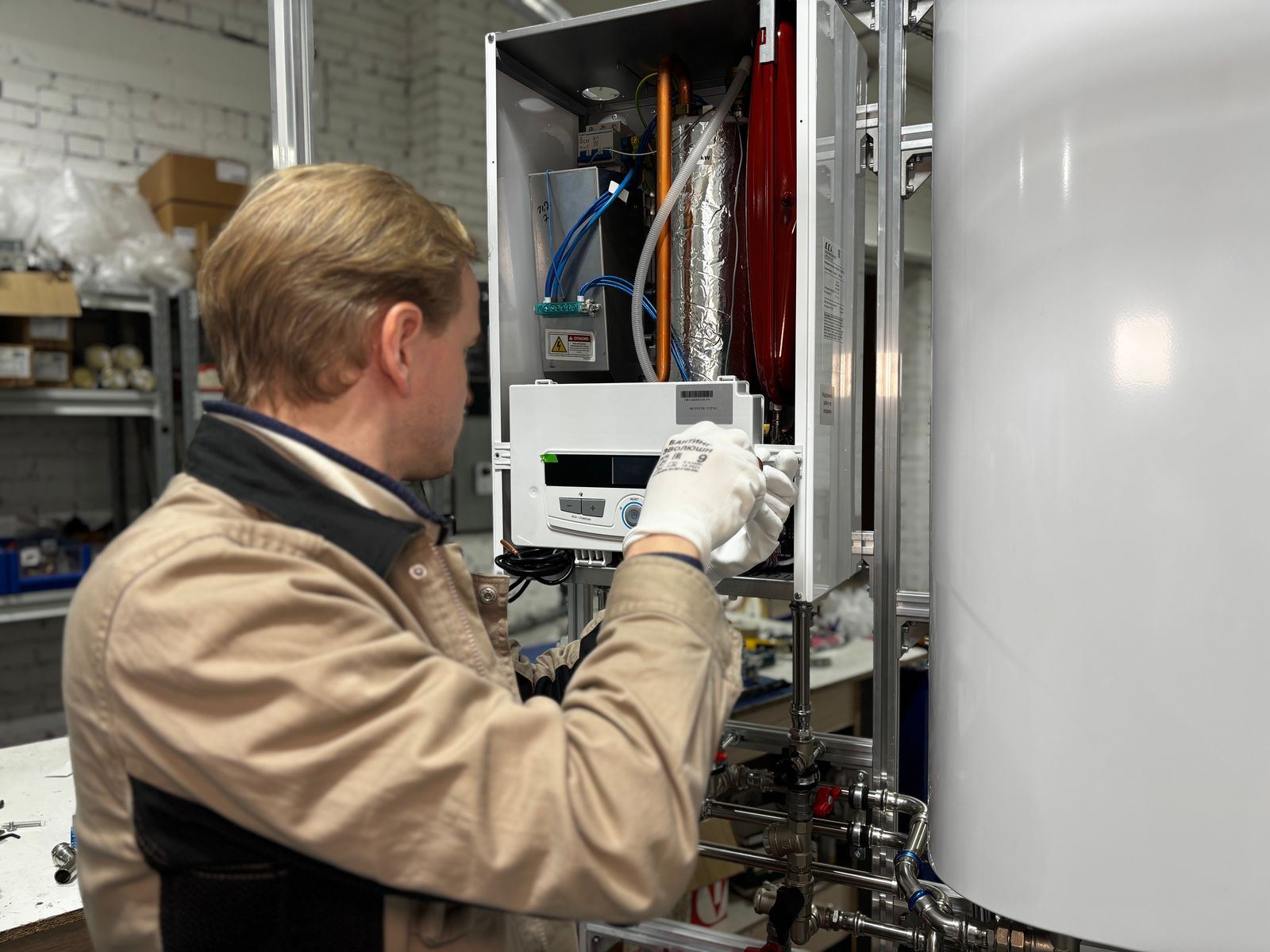
Signs You Need Water Heater Leak Repair in Hamilton
Most tanks announce trouble weeks or months ahead with rumbling noises, rusty water, or hot showers that keep getting shorter. If any of the following sound familiar, it's worth having the unit checked:
- Moisture or rust flakes under the burner access cover
- A weeping drain spigot on the lower front of the heater
- A wet floor near the water heater that keeps coming back
- Mineral buildup or rust around the hot and cold connections
- Water dripping from the relief valve or out of the end of its discharge pipe
- Water stains, soft flooring, or musty smells near the heater closet
- Higher water use with no obvious explanation
- Rusty or discolored hot water paired with dampness at the base
Early Action Saves Money
Left alone, even minor symptoms like rumbling or temperatures that swing from hot to warm tend to mean the heater is working its way toward a breakdown. At the first hint of a problem, reach out to Hamilton Water Heater at (513) 270-1009 and we'll take a look.
Get Water Heater Leak Repair Handled Today
One call gets a technician scheduled and a clear price before any work starts.
Call (513) 270-1009 NowCommon Questions We Hear
Why Hire a Professional for Water Heater Leak Repair?
A leak looks like a simple job until you try to find it. Water can start at a top fitting, run down under the jacket, and show up at the base, and condensation on cold tanks add confusion. A wrong part is not the only risk. Plugging a dripping relief valve removes the protection against overheating and overpressure, forcing a corroded connection can crack it wide open, and electric heaters bring high-voltage wiring into a wet area. When the tank itself is the source, no DIY fix will hold for long.
The value of a professional is a confirmed answer. You get the true source, the right parts, and an explanation of why it failed. When a relief valve drips, we test pressure and expansion. When a fitting is rotten, the connection gets replaced, not cranked tighter. When condensation is the only issue, you hear that, and you keep your money. And when the tank itself is leaking, we recommend replacement honestly, with a drain pan, drain line, and leak alarm to limit damage if it ever happens again.
Step by Step: How a Visit Works
Good water heater work comes down to a consistent routine, and ours starts with a real diagnosis instead of a guess. Here's the short version:
Isolate the Leak
First the water gets stopped. We confirm the supply valve is closed, the heater is off, and the area is safe to work in.
Find Where It Starts
With the surfaces dried, fresh water shows us where the leak begins, whether that is a valve, a fitting, condensation, or the tank wall.
Check Pressure & Expansion
We gauge household water pressure and look at expansion control, because a closed system without room to expand spikes pressure every heating cycle.
Fix and Confirm Dry
We replace the failed part, refill and purge the tank, restart the heater, and confirm every joint stays dry. A leaking tank gets an honest replacement recommendation instead.
How to Prevent Water Heater Problems
A few simple habits, like an annual flush and a quick look at the relief valve, can add years to a tank. Put these technician-approved steps to work at home:
- A properly drained pan under the tank catches small leaks before they reach your floors
- Put a water leak sensor on the floor next to the tank so a drip gets noticed early
- An expansion tank that is present and properly charged keeps the relief valve from opening every cycle
- Replace a depleted anode rod before the steel tank becomes the next target for corrosion
- Draining sediment every year helps the bottom of the tank last longer
- A quick monthly look at the base, valves, and top connections catches leaks early
- Check your water pressure; if it runs above about 80 psi, a pressure-reducing valve protects the tank and valves
Should You DIY or Call a Pro?
Online videos may help in a pinch, yet lasting repairs and code-compliant installs depend on correct venting, proper relief valve discharge piping, and a trained technician. Consider the following comparison:
| Factor | DIY Attempt | Professional Service |
|---|---|---|
| Finding the Source | Fix the part nearest the puddle | Leak traced to its true starting point |
| T&P Valve | Valve capped to stop the drip, a serious hazard | Pressure and expansion tested, valve replaced properly |
| Corroded Connections | Tightened until the fitting cracks | Corroded connections replaced with new fittings |
| Condensation vs Leak | Condensation mistaken for tank failure | False leaks ruled out with testing |
| Water Damage | No pan, no alarm, no plan | Protection added where it matters most |
| Outcome | Temporary fix that may fail again | Leak solved and cause corrected |
Get Water Heater Leak Repair Help Today
The sooner you call, the sooner the hot water is back. Reach Hamilton Water Heater for fast service.
Get Help: (513) 270-1009Water Heater Leak Repair Across the Hamilton Area
Our technicians handle water heater leak repair throughout Hamilton and the surrounding communities, with the same upfront pricing everywhere we work.