Tankless units are sophisticated machines, and that is both their strength and their weak spot. Instead of keeping forty or fifty gallons hot around the clock, a tankless heater springs into action only when water starts moving: a flow sensor detects demand, the control board fires the burner or elements, and water is heated on its way through the heat exchanger. Every step is watched by a sensor, and if any reading drifts outside its expected range, the board shuts the heater off and displays a code. For Hamilton, OH homeowners, that usually traces back to a short list of causes: scale building up inside the heat exchanger, a sticking or dirty flow sensor, an ignition problem at the igniter or flame rod, or a venting or gas supply issue the unit reads as unsafe.
Our approach to tankless repair is simple: measure first, replace second. When we arrive at your Hamilton home, we record the active code and the unit's fault history, then work through the systems behind it. Flow sensors are checked with water running to confirm they report demand correctly. Flame rods and igniters are tested electrically. Gas pressure is read at the inlet with the burner at maximum, because a line that holds steady at idle can sag badly under full load. The vent and air intake are inspected end to end, and the heat exchanger is judged by the temperature rise it achieves at a known flow. By the time we recommend a repair, we know it is the right one.
After the fault is pinned down, most repairs are finished in a single visit. We descale heat exchangers with a pump and descaling solution circulated through the service valves, replace worn flow sensors, igniters, flame rods, thermistors, and combustion fans, clean inlet filter screens, and correct venting problems that trip pressure switches. When the real issue is a gas line sized for the old tank heater, we tell you plainly and quote the correct pipe run, because no amount of part swapping will fix a unit that is starved for fuel. If you are fighting a cold-water sandwich, we explain whether it is normal behavior for your model or a sign of a setting, fixture, or recirculation problem we can correct. Call (513) 270-1009 and we will get your hot water flowing again.
Our most requested service is Water Heater Repair in Hamilton. Either is a good place to start.
How to Tell Something Is Wrong
Catching a symptom early is often the difference between a quick part swap and a tank that gives out on the garage floor. These are the red flags our technicians see most often before a breakdown:
- An error code flashing on the unit's display
- Unusual noises from the cabinet, like a whine, a roar, or a rattle
- A heater that only fires when water runs at full blast
- Hot water that cannot keep up with more than one fixture
- Water that swings between hot and lukewarm in the middle of a shower
- Leaks under the unit or around its water connections
- Repeated ignition attempts, then a shutdown
- Cold slugs in the middle of hot water that last longer than before
Act Before It Gets Worse
A worn-out anode rod, a sediment-choked tank, or a weak thermocouple rarely fixes itself, and the repair usually costs more the longer it waits. Call Hamilton Water Heater at (513) 270-1009 at the first sign of trouble.
Need Help With Tankless Water Heater Repair?
One call gets a technician scheduled and a clear price before any work starts.
Call (513) 270-1009 TodayYour Tankless Water Heater Repair Questions Answered
Why Professional Tankless Water Heater Repair Matters
Start with what is at stake. A gas-fired tankless heater can burn nearly 200,000 BTU per hour at full fire, and its vent is the only thing carrying carbon monoxide out of the house; a joint that pulls loose or an intake that gets blocked changes that in a hurry. On the electric side, the loads are large, frequently more than 100 amps spread over several 240-volt circuits. Then there is the diagnostic puzzle. Error codes point to a system, not a part, so a flow sensor fault, a scaled heat exchanger, and a bad thermistor can look nearly identical on the display, and guessing gets expensive.
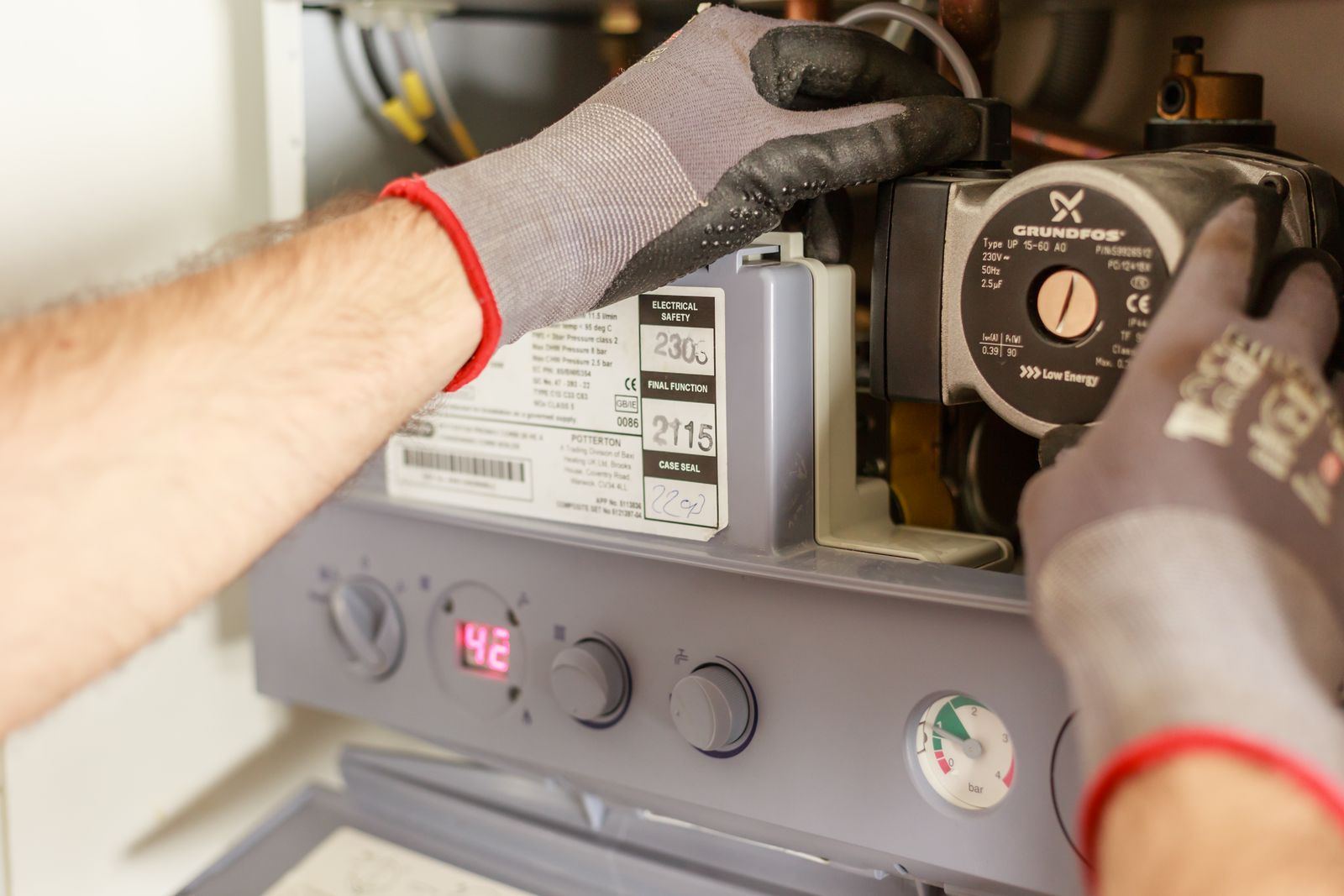
A trained technician with the right instruments gets to the answer faster. Ours read the fault history, measure flame signal and igniter resistance, test flow sensor output, and check gas pressure under full load with a manometer, which is the only reliable way to catch a gas line that holds pressure at idle but sags when the burner ramps up. We descale with a circulating pump and the right solution, then flush thoroughly so nothing corrosive is left in your plumbing. Just as important, you get an honest opinion: if the heat exchanger is damaged on an older unit, we will say so before you spend money on a repair.
Our Tankless Water Heater Repair Process
Our workflow is simple and thorough, so nothing gets missed between the fuel supply and the relief line. Here's the short version:
Read the Unit First
The control board is our first stop. We read the current code and past faults, then confirm the diagnosis with a meter and a manometer on the flow sensor, ignition parts, gas supply, and vent.
Plain Findings & Firm Quote
No surprises. We walk you through the cause and the fix and give you the price up front. If the real problem is an undersized gas line or a worn-out heat exchanger, you will know before anything is spent.
Same-Visit Fix
We carry the parts that fail most on tankless units, so flow sensors, igniters, flame rods, and thermistors are usually replaced on the spot, and a descaling flush takes about an hour.
Tested Under Load
Before we pack up, we open fixtures at low and high flow, measure the temperature rise, and make sure the burner and vent perform at maximum output.
Repair or Replace? Let's Figure It Out.
Our technicians can assess your water heater and recommend the option that actually makes sense.
Call (513) 270-1009 NowSimple Ways to Extend Your Water Heater's Life
Most of the failures we see could have been delayed for years with basic upkeep. Here's where to begin:
- Clear debris, snow, and dryer lint away from the vent and intake openings
- Never cut power to an outdoor or garage unit in winter, because it needs electricity to protect itself from freezing
- Treat a code that returns after a reset as a symptom worth diagnosing, not ignoring
- Clean the inlet water filter screen a few times a year so the flow sensor gets full flow
- Consider a water softener or scale-reduction filter ahead of the heater if scale keeps returning
- Tell us before adding a gas appliance, so the gas line can be checked for the extra load
- Schedule a descaling flush every year; hard water may call for one every six months
Should You DIY or Call a Pro?
The line between a safe DIY check and a risky repair is usually the moment you need to open a gas fitting, a vent connection, or an electrical cover. Consider the following comparison:
| Consideration | Doing It Yourself | Professional Service |
|---|---|---|
| Reading the Code | Swap parts until the code clears | Code confirmed by component testing |
| Descaling | Vinegar poured in without proper valves | Proper solution, pump, and flush time |
| Gas & Venting | Gas pressure and vent joints unchecked | Combustion, venting, and gas supply checked |
| Electrical Work | Live wiring inside the cabinet | Wiring and connectors tested safely |
| Parts | Wrong sensor ordered on a guess | Right part, installed once |
| Outcome | Symptom patched, cause remains | Unit tested at low and high flow |
Book a Visit Today
The sooner you call, the sooner the hot water is back. Reach Hamilton Water Heater for fast service.
Get Help: (513) 270-1009Tankless Water Heater Repair Near Hamilton
We serve Hamilton and its neighboring towns for tankless water heater repair, from quick same-day repairs to planned installs.